Industrial · 5Gate
Every truck leaving the mine is a slip, a data row and eight photos
5Gate reads the plate, matches the vehicle against the register, opens the barrier and prints the delivery slip right at the gate, in under a second. It runs on the local network of the mine, port or site: no internet needed, no GPU server.
- Plates
- Barrier
- Delivery slips
- Cargo
- Reports
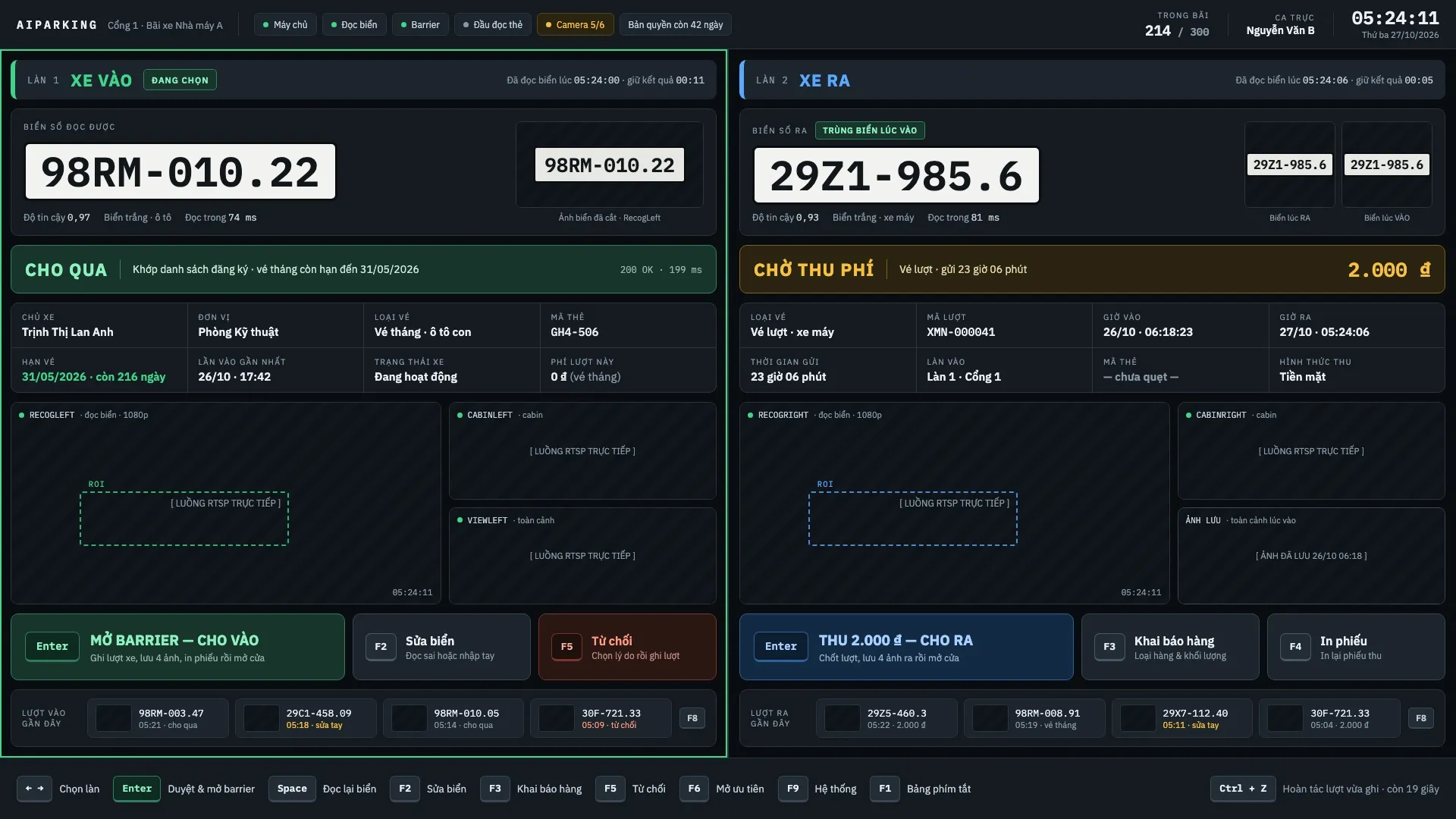
The new gate screen, Vietnamese interface; plates shown are samples.
Why mine owners are asking about their gates now
Vietnam's mineral law now requires mines to run weighbridges, surveillance cameras and data systems that connect to regulators. Several provinces have set 2026 deadlines and suspended mines that have not complied.
-
Data has to connect
The 2024 Geology and Minerals Law and its decrees and circulars require weighbridge and camera data to reach the authorities; a camera that only records is no longer enough.
-
Provinces set deadlines
Nghệ An, Quảng Trị, Bình Định and others required data connections during 2026; mines that had not connected were suspended.
-
Output reconciled against invoices
Tax authorities compare truck passes, tonnage and e-invoices. Every pass needs a data row with a plate, a time and images behind it.
One truck through the gate, in under a second
- 01
Camera sees the truck
The truck enters the lane; the plate camera and the overview camera record together.
- 02
Plate read
Long and square plates, front and rear, in 74 milliseconds on average.
- 03
Match
Checked against registered vehicles and hauliers; an unknown truck does not pass on its own.
- 04
Cargo declared
The operator picks the cargo type with one key; tonnage from the vehicle's set load or typed from the weighbridge ticket.
- 05
Barrier opens
The open command reaches the barrier in 63 milliseconds on average; every command's result is logged.
- 06
Slip printed, images kept
The delivery slip carries the serial number, front and rear plates, tonnage, cargo type and exit time. Eight images are stored with the pass.
An animation of a real pass: sample plate, the millisecond figure is the measured average.
One screen, two lanes for the operator
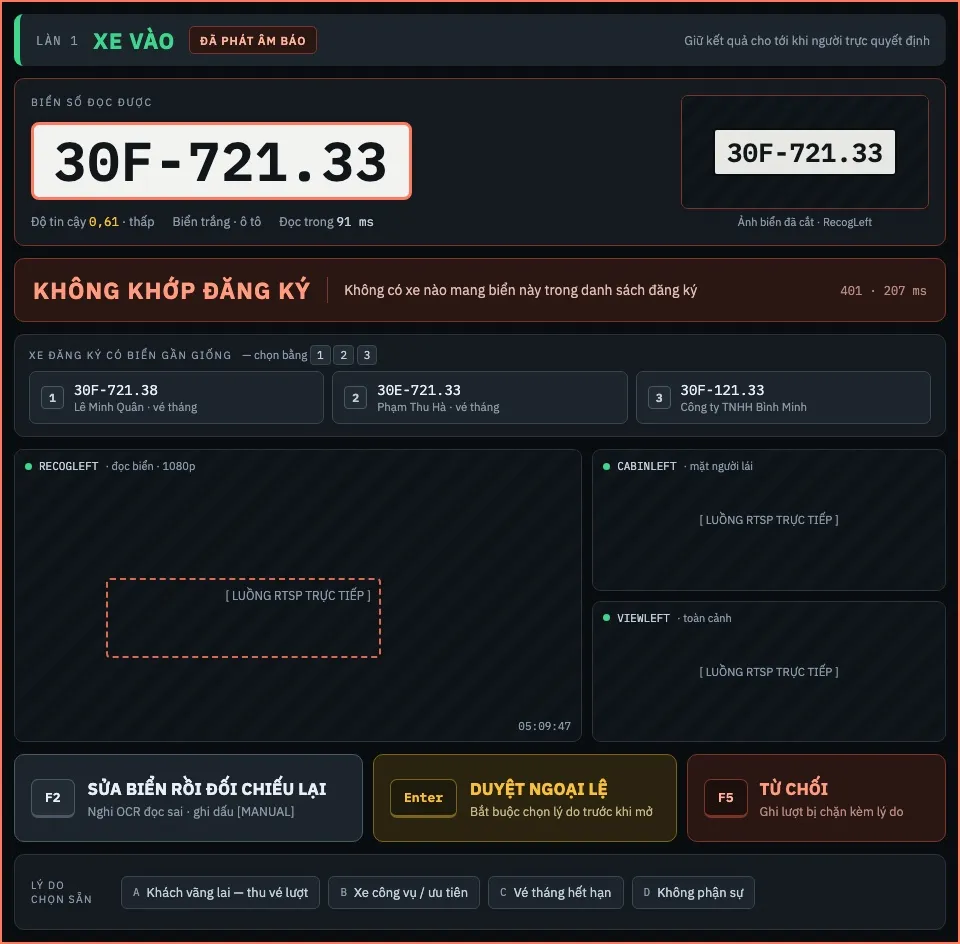
A dark gate screen for night shifts: entry and exit lanes side by side, large plates, three camera tiles, a strip of recent passes and keyboard shortcuts. An unknown truck shows a red band; opening requires a reason, and that opening carries the operator's name.
-
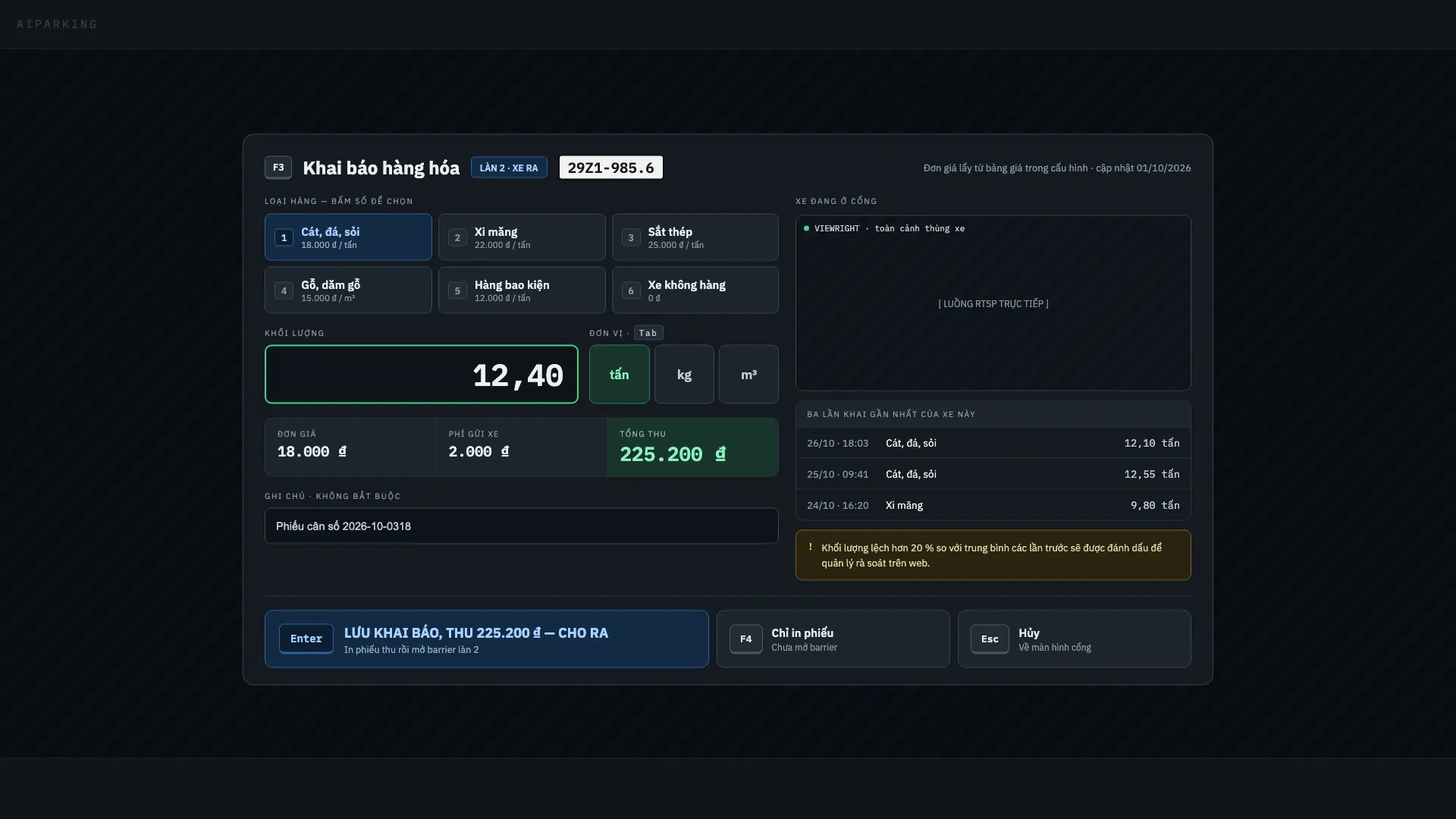
Cargo by number key
Six cargo types on keys 1 to 6, a price per type, and a warning when tonnage is more than 20% off the set load.
-
Manual opening with a reason
The barrier never opens just because. The operator picks one of four reasons; the system records the name, time and images.
-
The gate keeps running without the server
Each pass is queued on the gate machine and sent when the server returns: no lost passes, no lost images.
-
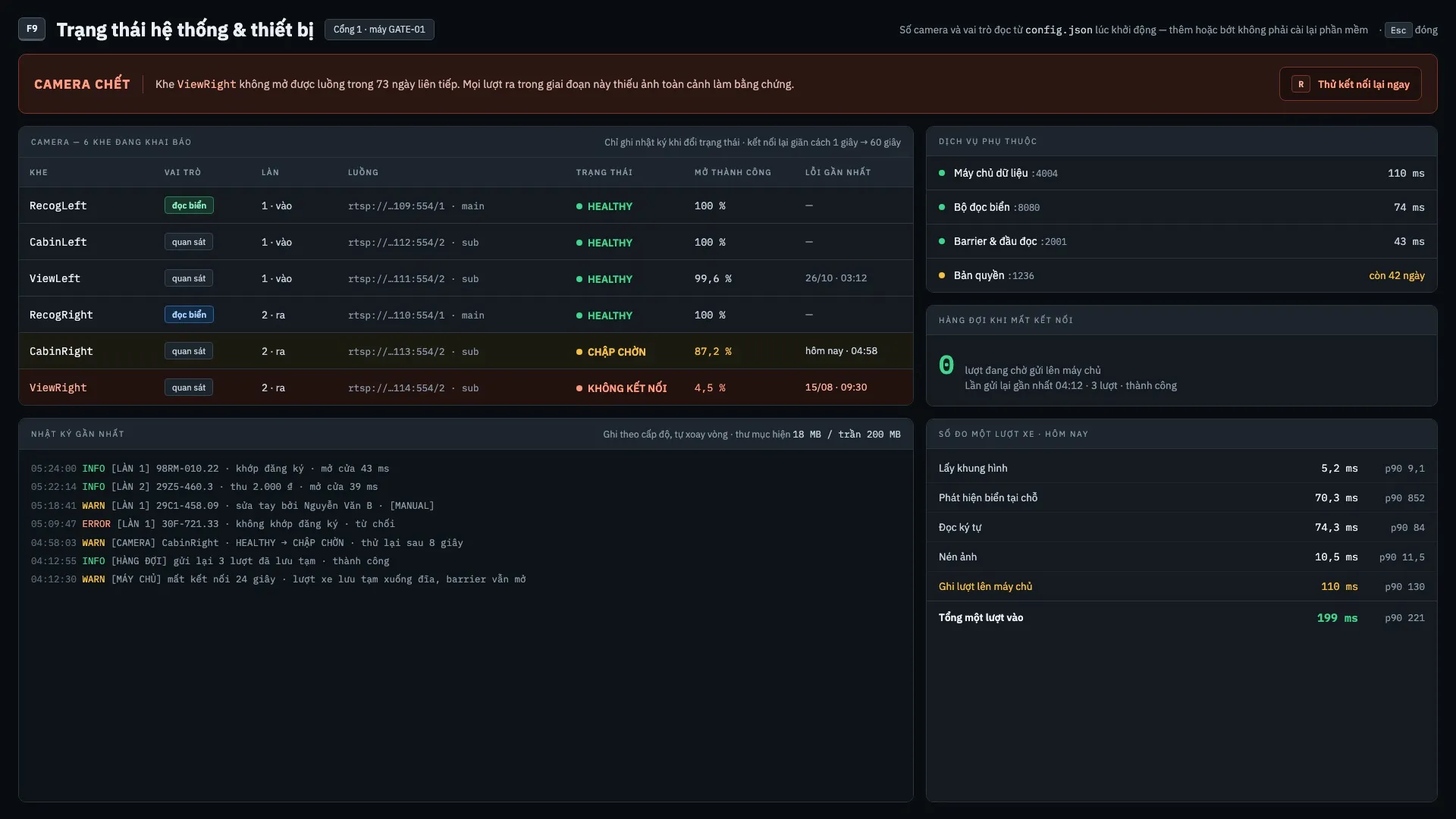
Equipment status
One key opens the health panel: which camera has lost picture, which barrier is not responding, whether the printer has paper.
Money and permissions kept apart
-
Tonnage times unit price
Every exit is a money row: tonnage, price per cargo type, amount. Export to Excel by day, week, month or haulier.
-
Operators never see the money column
Operators see trucks, plates and slips. Accountants see money. The owner sees everything. Permissions are per person and can change any time.
-
Every manual edit has a name
Editing a plate, correcting tonnage, opening by hand: each records who, when, before and after. When someone asks, there is an answer.
Built for
-
Stone, sand and soil mines
One or several gates, dump trucks and trailers, a delivery slip for every trip.
-
Ports and inland waterway terminals
Trucks collecting bulk cargo against a slip, matched to the receiving party and tonnage.
-
Construction sites
Trucks in and out by contractor; entry and exit times as the basis for machine hours.
-
Factories and industrial parks
Goods vehicles and internal traffic, access cards for regular trucks, pre-registered visitors.
Coming next
-
Connection to provincial systems
Send truck passes, tonnage and images to each province's mineral monitoring system in the format it requires.
-
Many gates, many sites, one screen
Owners of several mines see every gate on one board and compare output between sites.
-
Reading the weighbridge directly
Take the weight from the scale indicator over a serial link, nothing typed by hand.
These three are in progress and not in the current release.
5Gate questions
Our gate already has cameras. Can we reuse them?
Usually yes. IP cameras with an RTSP stream and a clear view of the plate will do; we survey the site before quoting.
What happens in a power or network outage?
The system runs on the local network at the gate and does not depend on the internet. If the server goes down, the gate machine keeps recording and resends later. Backup power for cameras and barriers is part of the survey.
Does it connect to the weighbridge?
The current release records tonnage from each vehicle's set load or from the weighbridge ticket. Reading the scale indicator directly is in progress.
How long does deployment take?
A half-day survey, then one to two weeks of installation and trial for a two-lane gate, depending on power and network on site.
Who holds the data?
The data sits on a server at your own site. We help with scheduled backups and with outside connections when you need them.
Tell us about your gate
We survey your gate in half a day: cameras, barriers, power, network and how you issue slips today. Then we quote for your exact number of lanes.